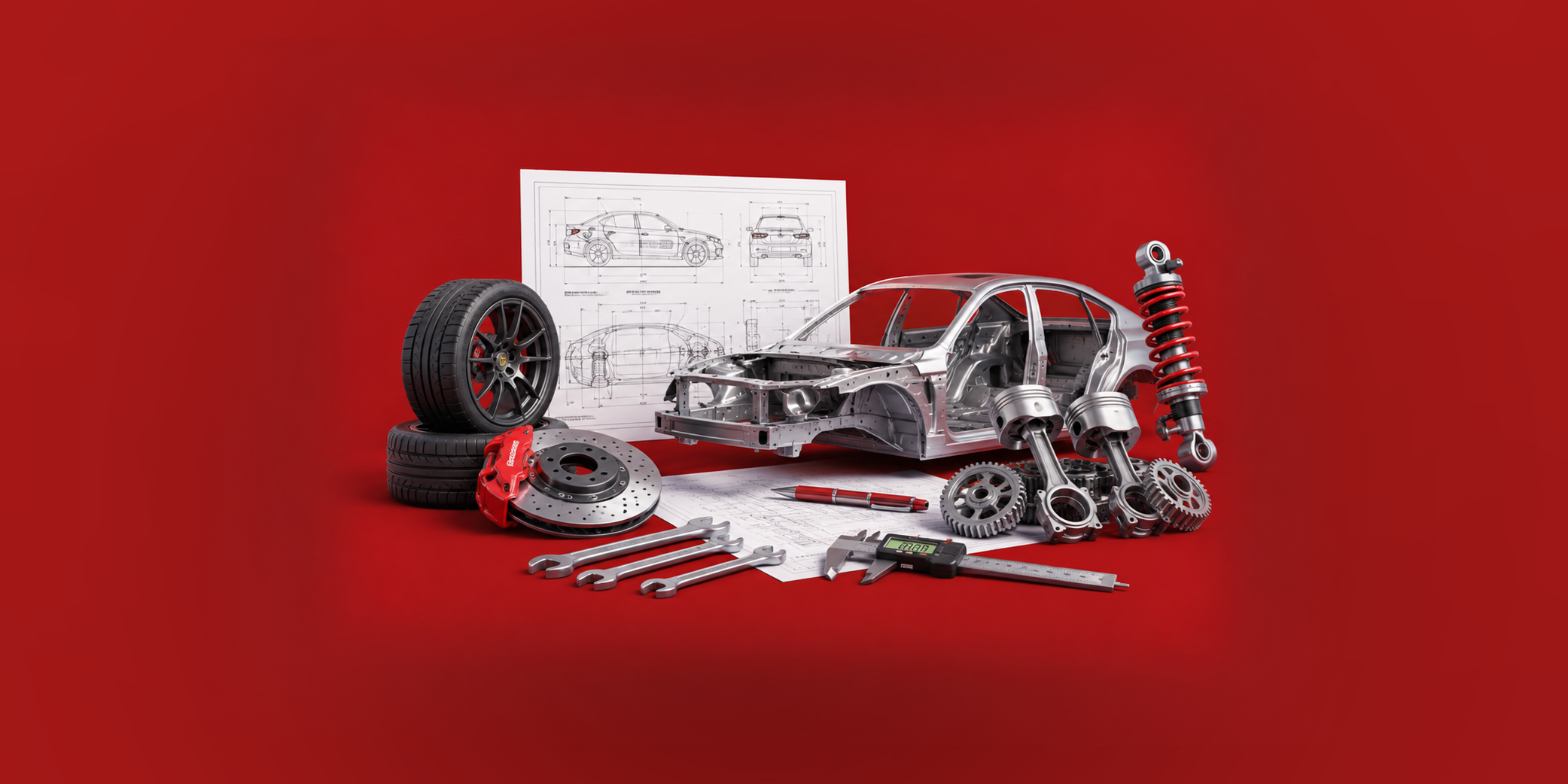
Automotive Engineering
Malaysia is a strategic destination for Automotive Engineering education in Southeast Asia, home to Proton, Perodua, and major regional manufacturing hubs for Honda, Toyota, Mercedes-Benz, BMW, Volvo, and Mazda. The country's National Automotive Policy (NAP 2020) prioritizes the development of electric vehicles (EVs), connected mobility, and ASEAN's emerging EV value chain. Programs are accredited by the Engineering Accreditation Council (EAC) Malaysia under the Board of Engineers Malaysia (BEM), and Malaysia is a signatory to the Washington Accord — meaning Automotive Engineering degrees are recognized in the UK, US, Australia, Canada, Singapore, Japan, and 20+ other countries.
What is Automotive Engineering?
Automotive Engineering is a specialized branch of mechanical engineering focused on the design, development, manufacturing, and testing of vehicles — including cars, trucks, motorcycles, and increasingly electric vehicles (EVs) and autonomous vehicles. It combines mechanical, electrical, electronic, software, and materials engineering.
Automotive Engineering programs in Malaysia typically run as 4-year Bachelor's degrees (BEng / BEng Hons). After graduation, engineers register with BEM as Graduate Engineers, then pursue Professional Engineer (Ir.) status after 3+ years of practice.
Skills Students Develop in an Automotive Engineering Program
- Vehicle dynamics and design
- Engine and powertrain systems
- Electric vehicle (EV) and hybrid technologies
- CAD modelling and CAE simulation
- Manufacturing and quality engineering
Automotive Engineering vs Mechanical Engineering vs Mechatronics
- Automotive Engineering: Specialized field focused on vehicle systems and automotive technology.
- Mechanical Engineering: Broader engineering discipline covering all mechanical systems.
- Mechatronics: Combines mechanical, electrical, and computer engineering — overlaps strongly with EV and autonomous vehicle development.
Common Programs and Subjects in Automotive Engineering
Malaysian universities like Universiti Teknologi Malaysia (UTM), Universiti Teknologi PETRONAS (UTP), and University of Nottingham Malaysia (UNM) offer Automotive Engineering programs combining mechanical fundamentals, vehicle systems, and EV technology.
Common subjects include:
- Engineering Mathematics
- Thermodynamics & Fluid Mechanics
- Vehicle Dynamics
- Internal Combustion Engines
- Electric Vehicles & Hybrid Technology
- Automotive Electronics & Embedded Systems
- CAD & Vehicle Design
- Manufacturing & Assembly Processes
- Vehicle Safety & Crash Engineering
- Automotive Project Management
Industry Partnerships in Malaysian Universities
Malaysian universities maintain strong partnerships with global automakers, supplier networks, and engineering bodies to align Automotive Engineering education with industry needs.
Global Automotive Partners: Proton, Perodua, Honda, Toyota, Mercedes-Benz, BMW, Volvo, Mazda, Bosch, Continental, Denso, ZF Friedrichshafen, Tesla, Hyundai
International University Partners: Various Malaysian universities maintain twinning programs and joint curriculum partnerships with leading engineering schools in the United Kingdom, Australia, and Germany, allowing for student exchanges and dual exposure.
Industry & Government Bodies: Board of Engineers Malaysia (BEM), Institution of Engineers Malaysia (IEM), Engineering Accreditation Council (EAC), Washington Accord, Society of Automotive Engineers (SAE International), Malaysia Automotive, Robotics and IoT Institute (MARii), and Malaysia Industry-Government Group for High Technology (MIGHT).

- –
- 272 (Globally)
- 261 (Globally)
- 158 (Globally)
- 97 (Globally)
Your Career Path
What are the entry requirements for an Automotive Engineering degree in Malaysia?
Entry into a Bachelor of Automotive Engineering program in Malaysia is governed by the Engineering Accreditation Council (EAC) under the Board of Engineers Malaysia (BEM). Typical requirements include:
Bachelor's Programs:
- A-Levels: Pass in 2 subjects with minimum CCC including Mathematics and Physics
- STPM: Minimum CGPA 2.50 with credits in Mathematics and Physics
- Foundation in Engineering / Science: Minimum CGPA 2.50 with Mathematics and Physics
- Matriculation: Minimum CGPA 2.50 in Mathematics and Physics
- International Baccalaureate (IB): Minimum 26 points with Mathematics and Physics at Higher Level
- UEC: At least 5 Bs including Mathematics, Advanced Mathematics, and Physics
- Diploma in Engineering: Minimum CGPA 2.50
SPM / O-Level / IGCSE Requirements:
- Minimum 5 credits including English, Mathematics, Additional Mathematics, Physics, and one other science subject
Other Requirements:
- IELTS 5.5–6.0 or equivalent for international students
- Strong foundation in Mathematics and Physics is essential
Postgraduate Programs:
- Master's in Automotive Engineering: Bachelor's in Mechanical / Automotive Engineering with CGPA ≥ 2.75
- PhD in Automotive Engineering: Master's degree with research proposal.
How much does it cost to study Automotive Engineering in Malaysia?
Automotive Engineering tuition varies between public, private, and international branch universities:
- Public Universities (international students): Approximately MYR 28,000 – MYR 42,000 per year
- Private Universities: Approximately MYR 32,000 – MYR 50,000 per year
- International Branch Campuses: Approximately MYR 45,000 – MYR 60,000 per year
- Total Program Cost (4-year Bachelor): MYR 112,000 – MYR 240,000 depending on institution
- Master's (1–2 years): MYR 35,000 – MYR 100,000 total
- Living Expenses: MYR 1,500 – MYR 3,000 per month (accommodation, food, transport, utilities)
Studying Automotive Engineering in Malaysia is significantly more affordable than the UK, Germany, or Australia, while delivering Washington Accord-recognized qualifications.
What is the job market outlook for Automotive Engineering graduates in Malaysia?
Automotive Engineering is one of Malaysia's strategically growing fields, supported by national EV initiatives and major investments by global automakers. Demand is particularly strong for:
- EV and battery engineers for new EV manufacturing facilities
- Powertrain and combustion engineers for traditional vehicles
- Manufacturing engineers at Proton, Perodua, Honda, Toyota, and supplier networks
- Vehicle electronics and software engineers for connected and autonomous mobility
Major employers include Proton, Perodua, Honda Malaysia, UMW Toyota Motor, Mercedes-Benz, BMW, Bosch, Continental, Denso, and a growing number of EV startups across ASEAN.
What are the starting salaries for Automotive Engineering graduates in Malaysia?
- Fresh Graduate Engineer: RM 3,000 – RM 4,800 per month
- Graduate Engineer (BEM-registered, 1–3 years): RM 4,800 – RM 7,500 per month
- Mid-level Engineer (3–8 years): RM 7,500 – RM 12,000+ per month
- Senior Engineer / Lead Engineer (8+ years): RM 12,000 – RM 18,000+ per month
- Professional Engineer (Ir. / P.Eng): RM 15,000 – RM 25,000+ per month
- Specialised Roles (EV Battery, Autonomous Vehicles): RM 15,000 – RM 30,000+ per month
- Annual range: RM 36,000 – RM 360,000+ per year depending on industry, seniority, and certifications
International postings (Singapore, Germany, Japan, Korea) typically pay 2–4x higher than Malaysian salaries — automotive engineers are highly mobile globally.
Why should you study Automotive Engineering in Malaysia?
Malaysia offers a globally recognized Automotive Engineering education: EAC-accredited programs under the Washington Accord, English-medium instruction, partnerships with Proton, Perodua, Honda, and global automakers, and affordable tuition compared to Western countries. Students benefit from hands-on workshop experience, exposure to ASEAN's emerging EV value chain, and clear pathways to Professional Engineer (Ir.) registration both locally and abroad — making Malaysia a smart, future-ready destination to study Automotive Engineering.